
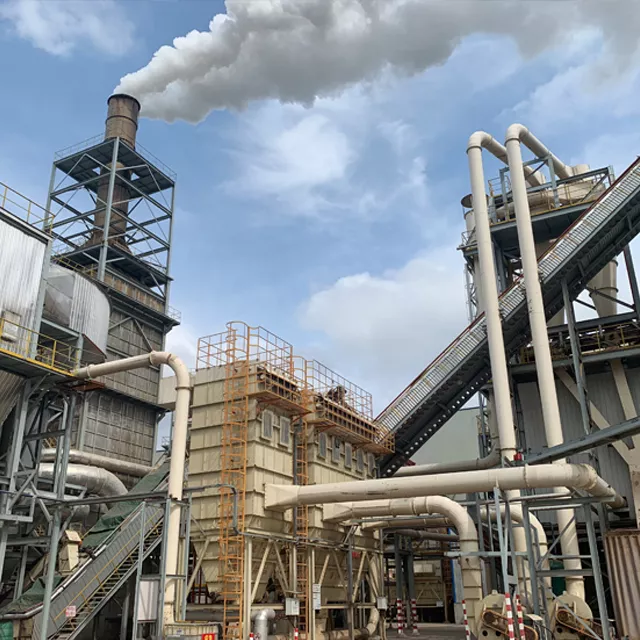
A particle board production line is a manufacturing process that produces engineered wood panels made from wood particles, such as wood chips, sawdust, and wood shavings. The particle board is a composite panel that is used in a variety of applications, such as furniture, flooring, and building materials.
The production line typically starts with the raw material, which is wood particles. These wood particles are first sorted and cleaned to remove any impurities and unwanted materials. The wood particles are then dried to a specific moisture content to ensure consistency in the final product.
What Machines are Required to install PB Production Line
Raw material → Drum-Planing → Disc Chipper → Shavings Drying → Virbrating Screen → Glue Mixing Machine → Paving Machine → Pre-press Machine → Hot Press → Cooling Board → Saw Cutting → Sanding Section

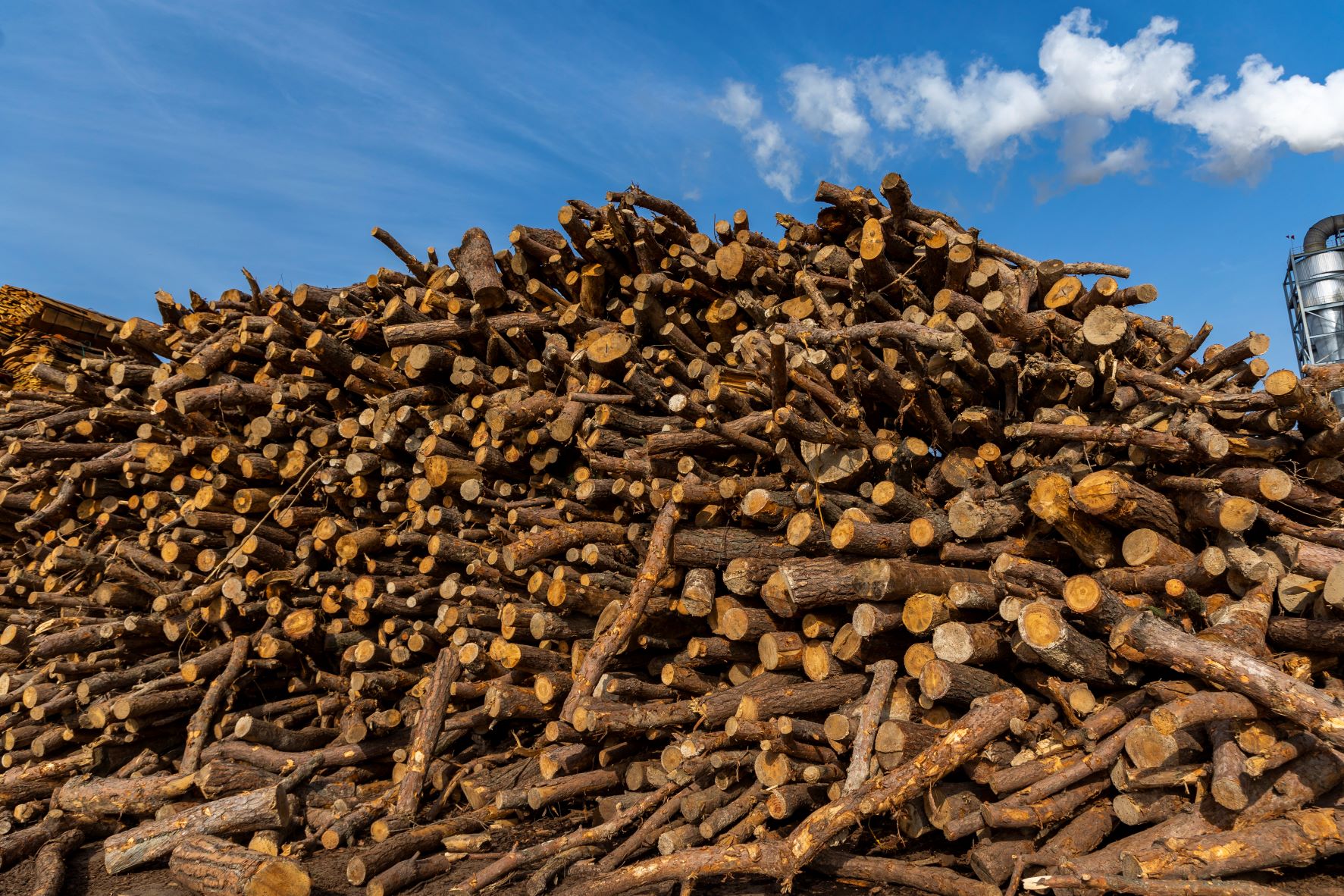
1.Raw Material
Coniferous and broad-leaved woods are mostly mixed, low-density raw materials are used, the pH value should be appropriate, and the content of extracts (fats) should be as little as possible.
The bark content should be less than 10%, and only used as the core layer Moisture content requirement 40~60%.

2.Drum Chipper
Drum chipper/disc chipper, which cuts raw materials into wood chips of certain specifications. Qualified wood chips: length 16-30mm, width 15-25mm, thickness 3-5mm, uniform size.
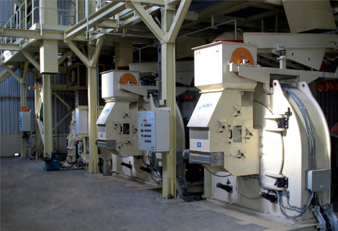
3.Disc Chipper
The ring-type long wood flaker directly processes logs into high-quality surface and core shavings, meeting the needs of long shavings such as oriented strand boards and super-strength particle boards.
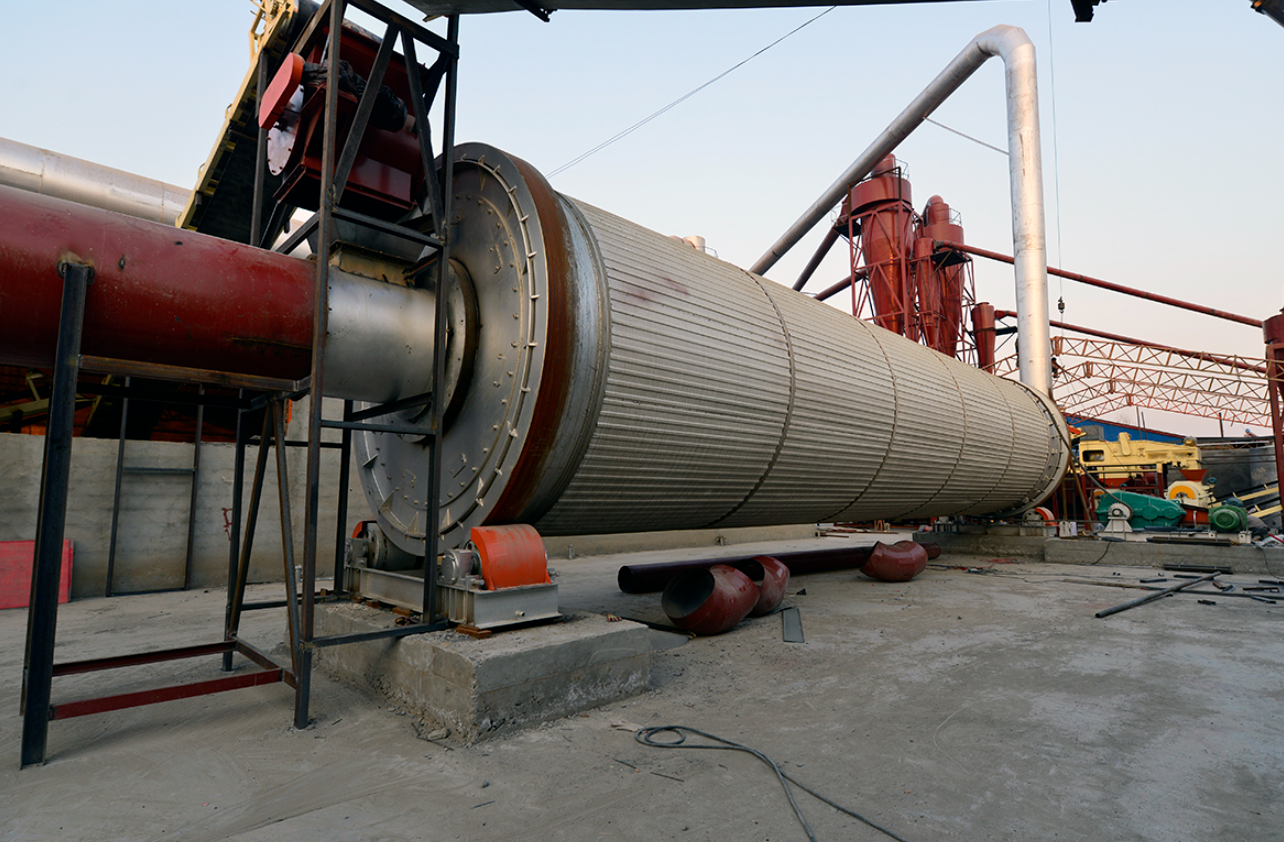
4.Shavings Drying
The main types of dryers used are: Rotor dryer, single-pass dryer, three-pass dryer, three-pass dryer
The general moisture content of raw materials is 35~60%
Required dryness before sizing (for reference): 3~6% for the surface layer and 2~4% for the core layer.
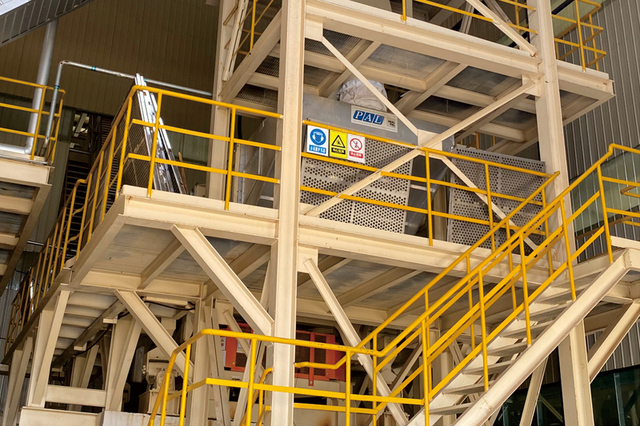
5.Virbrating Screen
The dried shavings are screened out of different sizes and specifications, and the coarse and fine shavings are separated and used for the surface layer and the core layer respectively. The too fine wood powder can be used as fuel, and the too large ones enter the sieve ring type grinder for grinding.
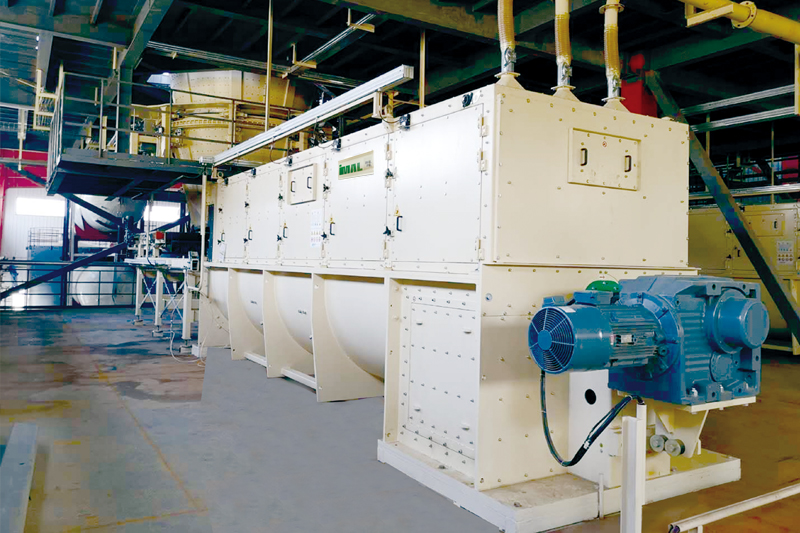
6.Glue Mixing Machine
Surface and core shavings are glued separately, and after metering, they are sent to the glue mixer, and the glue supply system sends the required glue to the glue mixer, and they are fully stirred evenly.
Factors affecting the amount of sizing: rubber type (UF/PF), tree species (broad-leaved tree/coniferous tree), shape of shavings (coarse shavings/fine shavings) and surface quality (whether the surface is rough or not).
 7.Paving Machine
Equipment for paving and forming the shavings after sizing. Requirements: Uniform paving, symmetrical structure, and reasonable distribution of shavings in the surface core layer
Generally, the core layer is 1/2~3/4 of the total amount, and the upper and lower surface layers are 1/8~1/4.
As the thickness of the sheet increases, the content of the surface layer decreases.
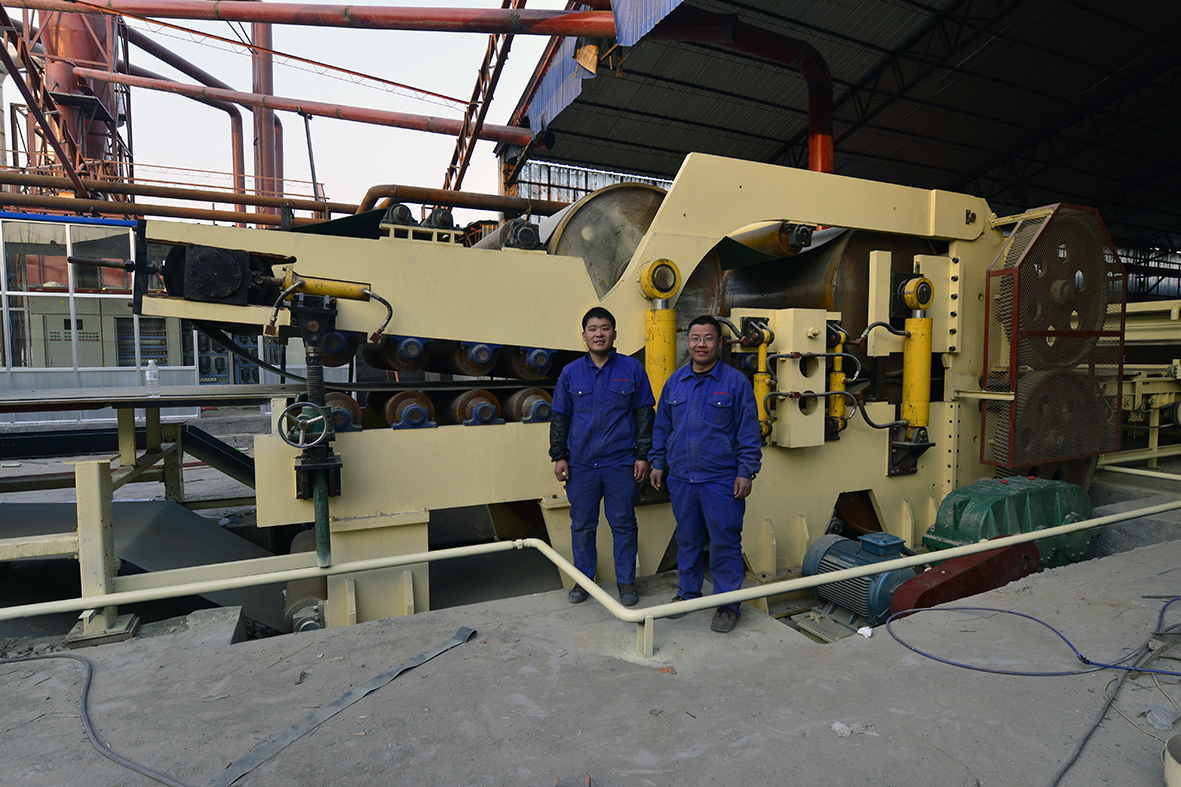
8.Pre-press Machine
The paved slab is continuously rolled by a pre-pressing machine to form a slab with a certain structural strength. The host is composed of frame, base and roller.

9.Hot Press Machine
The paved slab is continuously rolled by a pre-pressing machine to form a slab with a certain structural strength. The host is composed of frame, base and roller.
Pre-compression process reference: compression measure 1/2~1/3; pressure 1.5-1.6Mpa (minimum not less than 1Mpa), pre-compression time: 10-30s, rebound rate: 15-25%.
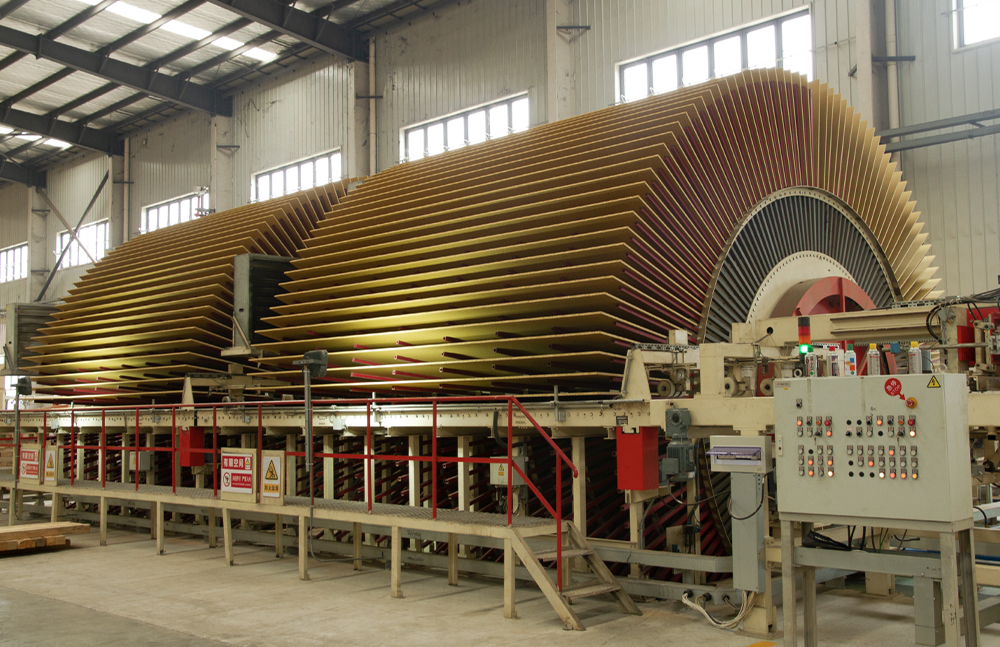
10.Cooling Line
The temperature of the board after hot pressing is higher, the surface temperature of the board itself is higher than that of the core layer, and the cold board eliminates thermal stress, so that the temperature of the board and the environment tend to be in balance, preventing warping and deformation.

11.Sawing Machine
Trim the horizontal/longitudinal side of the board to make the board of the required specification.

12.Sanding Section
After cooling the raw board for 24~72 hours, sand it, sand off the pre-cured layer on the board surface and ensure its thickness tolerance requirements.
Main Parameters of Continuous Press
Technical Deta of PB Production Line
Production process reference of PB Production Line
Advantages of Particle Board Production Line
Cost-effective: Particle board production lines are cost-effective compared to other wood-based panels, such as plywood and MDF. They are made from wood waste and low-quality logs, making them an affordable alternative.
Environmentally friendly: Particle board production lines use wood waste, reducing the amount of wood that goes to landfills. Additionally, some manufacturers use eco-friendly adhesives that have lower emissions of formaldehyde.
Versatile: Particle board can be used in a variety of applications, including furniture, flooring, cabinetry, and construction.
Consistency: Particle board production lines use advanced technology to ensure consistency in the thickness and density of the panels, ensuring quality.
Customizable: Particle board production lines can produce panels in different sizes, thicknesses, and grades to meet the specific needs of the customers.
Easy to work with: Particle board is easy to cut, drill, and shape, making it a popular choice for DIY projects.
Durable: Particle board is strong and durable, making it suitable for use in a variety of applications.
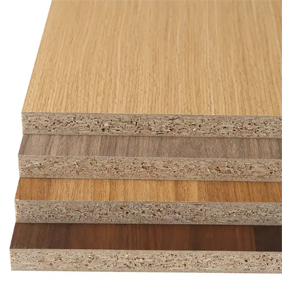
Particle Board

Particle Board

Particle Board
Significance of Quality Control
Quality control guarantees that each particle board leaving the production line is free from defects, possesses optimal structural integrity, and adheres to dimensional accuracy. Subpar quality can lead to product recalls, dissatisfied customers, and reputational damage. Hence, quality control directly influences both profitability and customer trust.
Key Parameters for Quality Control
Raw Material Inspection
The foundation of quality begins with inspecting incoming raw materials. Wood particles must meet specific size, moisture, and contamination criteria to ensure uniformity in the final product.
Particle Formation Process
The process of forming particles involves blending wood chips, resin, and additives. Monitoring this process in terms of temperature, pressure, and mixture ratios is vital to prevent inconsistencies.
Binding and Pressing Phase
During binding and pressing, where particles are compressed and heated, adherence to optimal temperature and pressure profiles is critical. Deviations can result in weakened boards or uneven surfaces.
Surface Finishing and Cutting
Surface finishing not only enhances the board’s aesthetic appeal but also influences its durability. Precision cutting and sanding must be carried out while maintaining uniform thickness.